Last Updated on October 28, 2026 by Nanda Maa
Day 9–10
The Sandhi Homa
It wasn’t Navami yet when I awoke on the ninth day (19th October). According to the Panchang (Indian lunar calendar), Navami was due to begin at 10:51 am IST that day.
The time between the end of Ashtami and the start of Navami is called the Sandhi (or junction). It is customary to offer a special mantra for Chamunda to the divine fire for forty-eight minutes spanning the Sandhi—24 minutes before and 24 minutes after. In our case, this meant starting at 10:27 am IST and ending at 11:15 am IST.
We had wanted to add a “regular” Seedha Chandi Path to this homa, since we had been chanting the Tantra Bija Chandi for the previous eight days. We estimated that we needed about half an hour for the initial offerings, the invocation of fire, and a mala for Ganesh. So, we started our homa at 9:45 am IST, with Antarma as the lead pujari. We agreed to keep offering Navarna mantra ahutis once we completed the mala for Ganesh, until the start of the Sandhi at 10:27 am. We then immediately switched to the Chamunda mantra (Om Hreem Chum Chamundaayai Swaahaa) and kept chanting it—at times loudly, at times quietly, and at times silently—until 11:15 am. Once the Sandhi period was complete, we proceeded directly to the Seedha Chandi paddhoti, beginning with the Rig Vedoktam Ratri Suktam.
We chanted the Seedha Chandi in rhythm with our breathing—one in-breath for the Navarna mantra, followed by two verses from the text on a single out-breath. It was a pleasant variation from the Tantra Bija Chandi of the past eight days, and almost like a homecoming—a return to familiar ground.
Maybe because it was the last time during Navaratri that we would all chant together, we kept adding mantras after the Chandi was completed. We offered purnahuti around 1:45 pm, a full four hours after we had started. It was a bittersweet moment; we were tired but exultant that our sankalpa had been completed successfully, thanks to Maa and Swamiji’s grace and blessings.
The Walks and the Last Supper
After lunch, doing the laundry and resting, a few of us went for a long walk outside the ashram grounds. We had taken to walking in the evenings before Aarti and had explored both directions of the single-lane road. To the south, about a kilometre away, was the tiny hamlet of Gangadwadi. The north was even more sparsely populated, with just a house or hut here and there. There were magnificent views of Lake Waki along the road heading north, and we preferred to walk that way and enjoy the scenery.
More “lasts of this Navaratri” followed—the Aarti, bhajan, and then dinner. Usually, we all came in for meals as time allowed and ate together in twos and threes. Not so for our “last supper”. We all sat together in that tiny kitchen—the helpers and sadhaks—and had a meal of dosa/idli. We toasted one another with buttermilk to celebrate the successful completion of our sankalpa.
The Sunrise and Farewells
The next morning was Vijayadashami. I woke up early to complete another personal milestone—to watch the sunrise across Lake Waki. I had been doing puja at that time on all the other days, so this was my only chance to watch the sunrise. And Mother Nature did not disappoint.
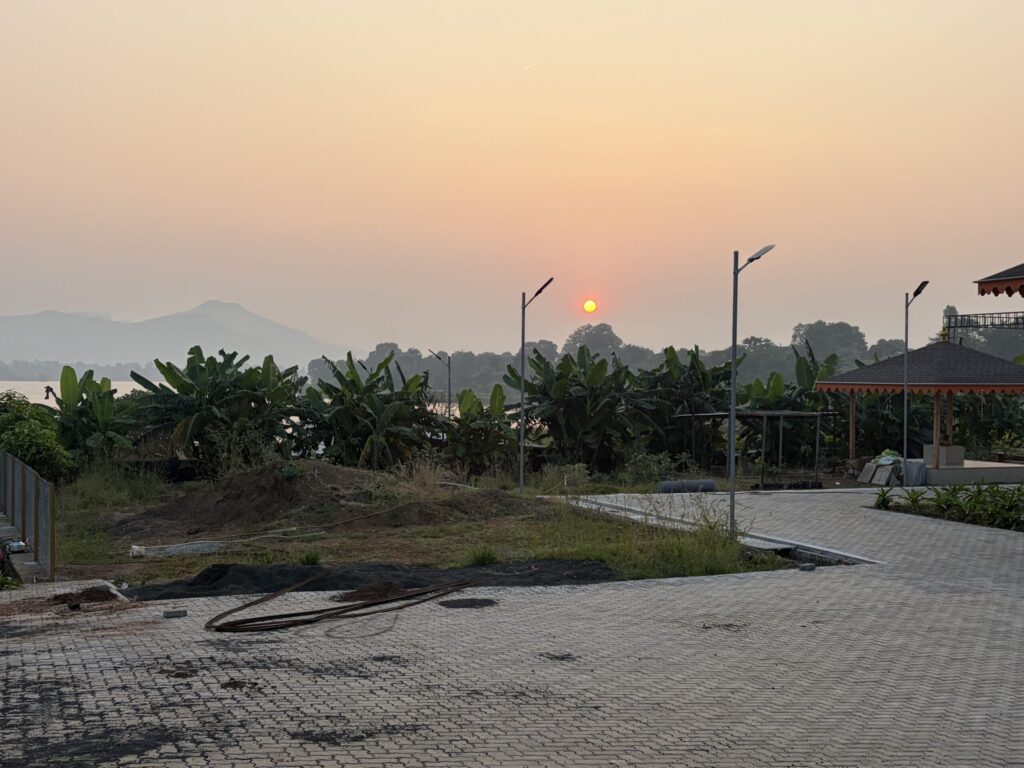
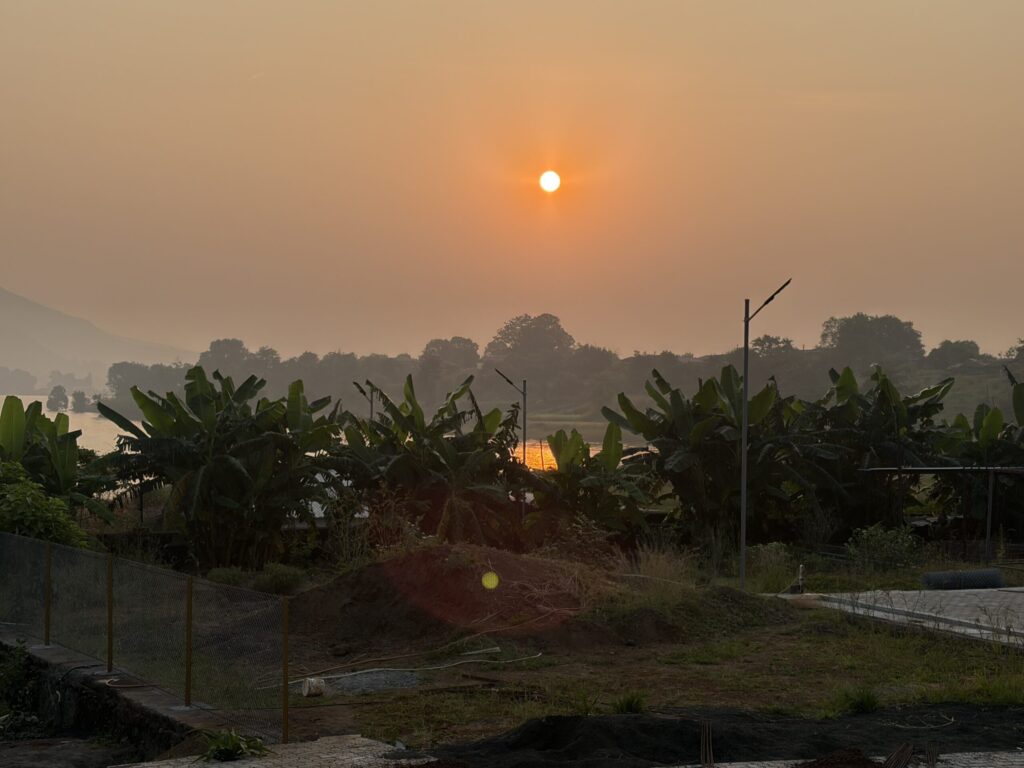
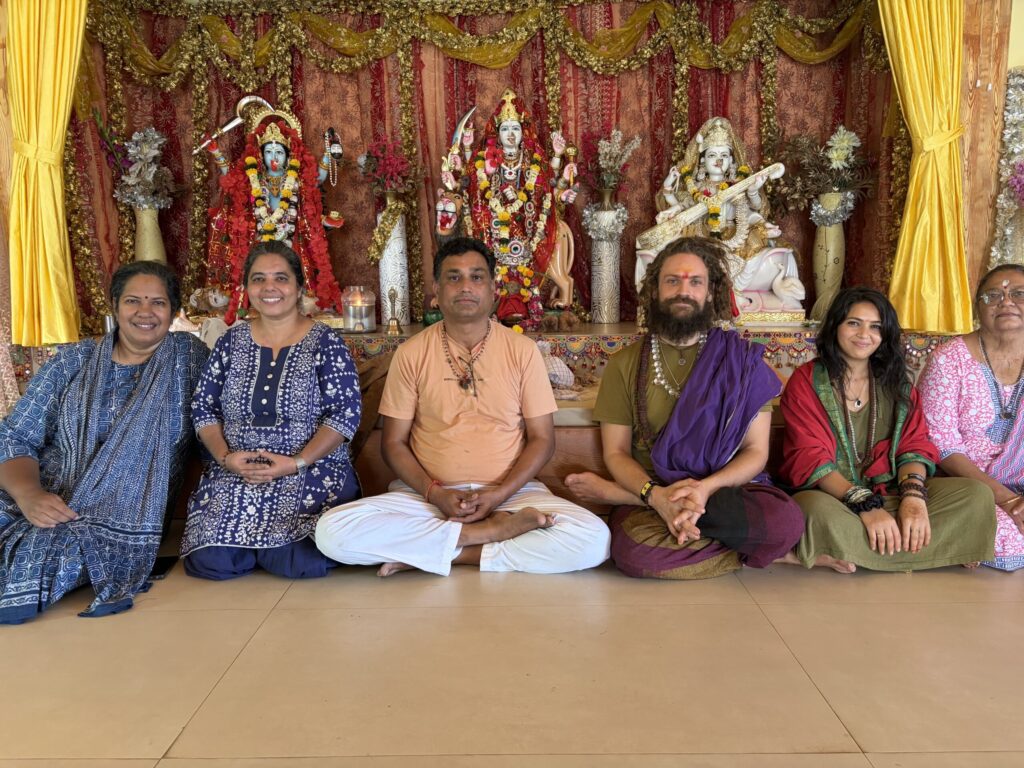
After a hearty breakfast, it was time for a few group photos and selfies before leaving for our respective destinations. Brahmani, Nayna, and I were headed to Mumbai, while Antarma and Shila were headed towards Trimbakeshwar.
Reflections on the Experience
So how did I feel about our Navaratri experience at Ghoti? I missed Maa and Swamiji greatly, but still felt their presence at the ashram. I was grateful to have had a window of time during which I could leave behind worldly cares and focus on sadhana and satsanga. I was grateful for the wonderful ashram that Maa and Swamiji had established at Ghoti, and to their sincere devotee Prashant, who took care of the logistics of running it. All I had to do was step in and focus on my sadhana. What a great opportunity! How could I even begin to repay them?
When I first arrived at the ashram, I had the attitude of a polite guest. I waited in the wings, watching Prashant/Moushi/Mama do the work and waiting to be told what to do. It didn’t take me very long to realize that it was Maa’s ashram, “my” ashram, and that I needed to take more ownership and be an active participant. After all, a Prashant, a Moushi, or a Mama cannot be picking up after me, and I am there to add value, not become a burden.
A Few Courtesies to Observe at an Ashram
I will add a few “code of conduct” guidelines based on some things I noticed during my stay. These are small courtesies to follow when staying at any ashram, and especially at Ghoti.
1. Join group events on time.That means arriving at least 15 minutes early to see if any last-minute help might be needed. Maa and Swamiji always show up much, much earlier.
2. Take care of your own washing up. At a minimum, wash your own dinner plate or any puja vessels borrowed from the supplies area. Also help with communal washing, such as brass lamps and plates.
3. Put things back where they belong. Don’t leave any item on the floor or on a chair. Put it back in its proper place. Ask if you don’t know where it belongs.
4. Turn off unnecessary lights and fans.
5. Keep the bathroom clean. Give it a quick clean after use, so that it is ready for the next person. If something is particularly dirty, please take the initiative to clean it as seva.
I am sure there are more such courtesies to observe. In fact, I remember Ramya Maa compiling a similar list at Devi Mandir, Napa.
I suppose it all boils down to the simple philosophy that a sadhu should give more than he/she takes.
This has been a long walk down memory lane, and I thank you for joining me. I will end with a few words from Antarma Baba and his experiences of Navaratri.
JAI SHREE MAA!
JAI SWAMIJI!