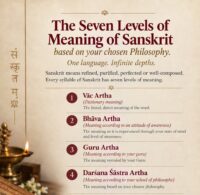
In the Vedic context, Sanskrit is considered the language of the gods (देववाणी, Devavāṇī) because it is the medium through which sacred knowledge (Vedas, Upanishads, Puranas) was revealed and preserved. It’s believed to be a vibrational language, where the sound itself carries spiritual power, making it integral to mantras and rituals.
 Sam means together, all, or all together. Krita is do. Sanskrit is the language that we all do together. It is a language based on the intrinsic, or innate vibration of existence.
Its alphabet is made up of "aksharas" which means indestructible, or without end. Sanskrit can also be translated as "put together." In modern language, we have a connotated symbol (words) that denotes an object. For instance, the word "dog" is the connotation for the denotative object that is a furry animal with a wagging tail. The relationship between the word, "dog" and the actual animal is arbitrary.
Science tells us that everything in existence is vibrating at a molecular level. Every vibration creates a sound. Sanskrit is a language that is based on the intrinsic vibration of the object. In other words, the object and the name of the object share the same vibration.

Kashyapa Sutra Bija Mantras
Human emotions can be correlated to specific sanskrit bija mantras. In the Kashyapa Sutra, we learn the secret of how to transform negative emotions into positive ones through the repetition of mantras.
Download the full list of bija mantras and practice transforming your emotions today…read more

Devi Gita Vocabulary
Chapter Four of the Devi Gita starts a fascinating journey for us to understand the language of the Goddess. …read more
Learn Key Sanskrit Definitions
~~OM~~
The glossary to the Kashyapa Sutras in Swamiji’s book, The Guru and The Goddess contains a broad and inspiring collection of Sanskrit words. These words and their meanings are helpful aids for any sincere student of yoga, philosophy, and Sanatana Dharma.

Pronunciation and the Chandi Samputs Class
In this video class we learn about Sanskrit chanting styles, techniques to deepen our sadhana, and the constituent ingredients of mantra sadhana: intention, motivation, sincerity, attention, bhava, and understanding. The class also gives a history of Sanskrit literature.
There are five videos in the Pronunciation and the Chandi Samputs class by Swami Satyananda Saraswati and Shree Maa.